
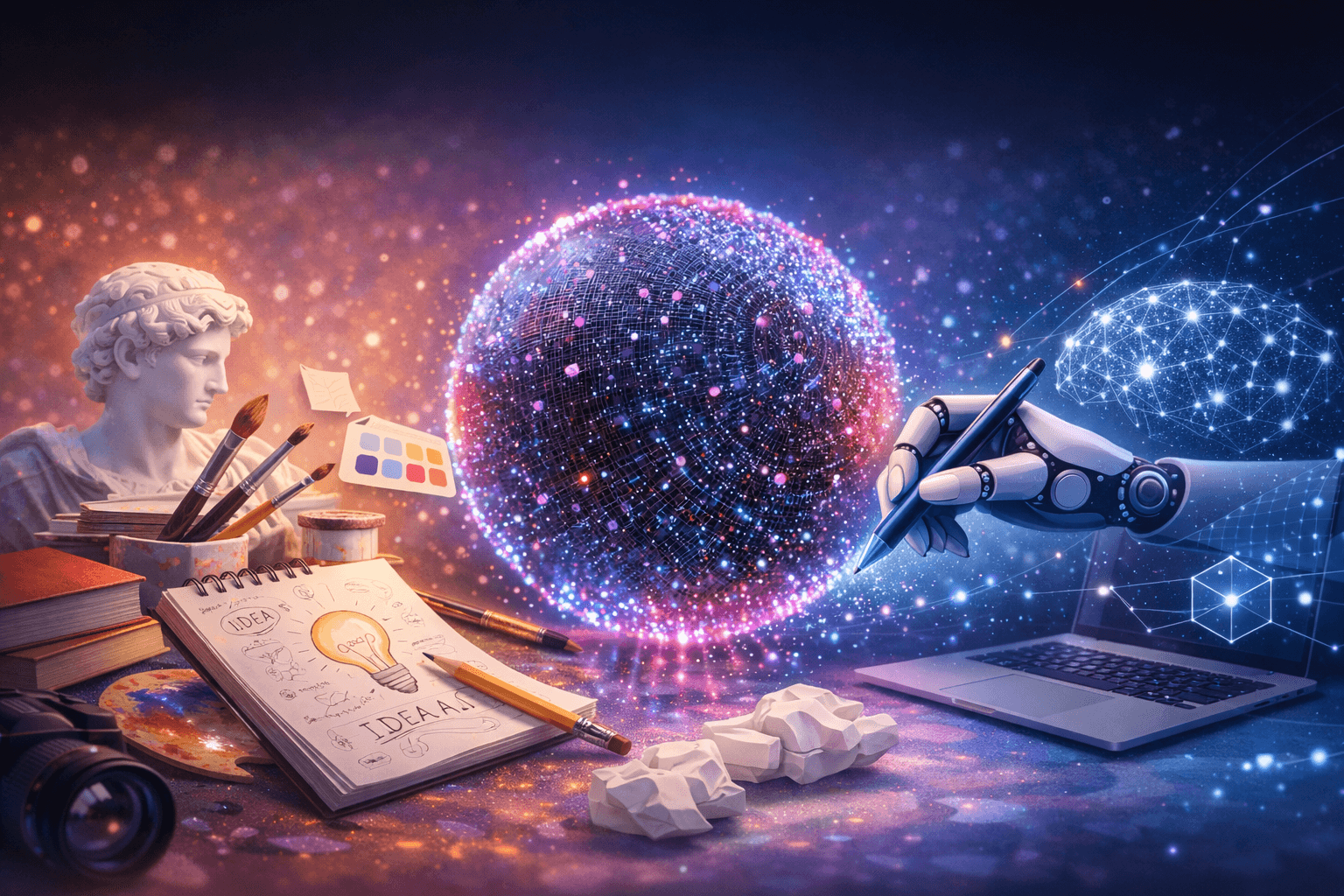
There’s a lot of debate around AI "learning from existing work" and whether it diminishes creativity. But isn’t that exactly how human creativity has always worked?
No designer, illustrator, or writer creates in isolation. We are constantly absorbing, learning, and refining our craft based on everything we’ve seen, studied, and experienced. The same designer today who is praised for their originality wouldn’t have had the same creative eye 50 years ago. Why? Because creativity isn’t something that appears in a vacuum—it’s built upon history, shaped by culture, and refined by exposure to new ideas.
Think about it: an early human couldn’t design a website or illustrate a children’s book the way we do today. Not because they lacked creativity, but because they hadn't yet learned from centuries of artistic evolution, technological advancements, and cultural influences. We stand on the shoulders of those before us, just as future generations will build upon what we create now.
We’ve Always Copied—That’s How We Learn
Let’s be honest—humans have always borrowed, imitated, and built upon each other’s work. Artists study and replicate the techniques of masters. Designers take inspiration from trends, historical styles, and even competitors. Writers echo themes, structures, and storytelling methods from those who came before them. And most of the time, this happens without explicit permission.
A designer who sees a beautiful poster and incorporates a similar layout or type treatment in their work isn’t stealing—they’re learning. A musician inspired by a rhythm or melody in an old song isn’t copying—they’re evolving the art form. Creativity has always been a remix of everything we’ve been exposed to.
So why do we hold AI to a different standard? AI, in many ways, is doing what humans have always done—learning from the past to create something new. The difference is that AI is a tool, not a replacement for human creativity. It doesn’t have intent, emotion, or lived experience. The originality still comes from us—how we guide, interpret, and refine its output.
Every creative field has evolved through new tools and technologies. Photography didn’t kill painting. Digital art didn’t erase traditional illustration. AI is just another evolution—one that, if used thoughtfully, can enhance creativity rather than replace it.
Instead of fearing AI, we should ask: how can we, as artists, designers, and storytellers, use it to push creativity further?
What do you think?